The Invisible Envelope: Cash Discipline When Your Bankroll Lives in an App
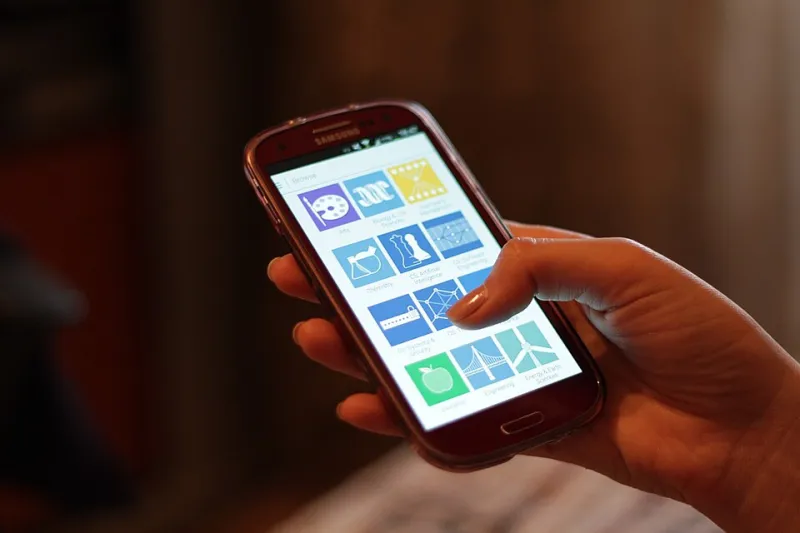
Photo: Océanos y dados, CC0, via Wikimedia Commons
For most of the modern slot era, discipline was a physical object. Players folded twenties into a paper envelope, wrote a number on the flap, and treated the remaining thickness as a budget. The system was crude, but it worked because it was slow. In 2026, as more US commercial and tribal floors adopt cashless wagering, that envelope has effectively moved into a phone — and with it, the friction that made it useful.
This is not an argument against digital wallets. It is an argument for rebuilding the envelope's logic inside them. Convenience is a feature; unexamined convenience is a leak. The Fortuna Palace view is that a slot player's cash discipline should be legible, portable, and defensible in a host conversation — whether the buy-in happens at a cage window or a tap on a screen.
The Envelope Was Never Really About Cash
The paper envelope was a commitment device. It forced three decisions before the first spin: how much would be spent, what would count as a win, and when the session would end. The cash itself was incidental. What mattered was that the boundary was visible and slightly annoying to cross.
Digital wallets remove the annoyance. A reload is a thumbprint, a PIN, or a face. The balance on screen is an abstraction, and abstractions are easy to renegotiate at 11 p.m. The risk is not that players suddenly lose self-control; it is that the environment stops prompting them to exercise it.
What the Wallet Changes — and What It Doesn't
Three things genuinely change on a cashless floor. First, buy-ins become discrete, timestamped events rather than a folded stack. Second, the operator's record becomes more complete than the player's memory. Third, the gap between deciding to spend and spending collapses to nearly zero.
What does not change is arithmetic. A budget is still a budget. A loss limit is still a loss limit. The house edge on a given cabinet is still the house edge, regardless of whether the wager was funded by a ticket, a bill, or a linked account. The player who kept a clean envelope in 2019 has no excuse for a murky one in 2026 — the tools are better, even if the prompts are quieter.
Three Ledgers Worth Keeping
A cashless player should maintain three distinct records, and should not confuse them.
The first is the operator's ledger: the transaction history inside the casino's app or player portal. It is authoritative on buy-ins, withdrawals, and machine activity, and it is the document a host will consult. Download it monthly. Do not assume it will remain accessible indefinitely.
The second is the personal ledger: a simple running note of session dates, starting bankroll, ending bankroll, and the amount that was intended as entertainment spend rather than recoupable stake. This is the document that answers the only question that matters in December: did the year cost what it was supposed to cost?
The third is the conversation ledger: a short list of the sessions, offers, and comp decisions worth raising with a host. It is not a complaint file. It is a summary — dates, tiers, and outcomes — that makes a fifteen-minute host meeting productive rather than archaeological.
Limits That Outlast the Reload Button
A loss limit that exists only in your head is not a limit; it is a preference. On a cashless floor, it should be encoded somewhere the wallet cannot argue with.
Where the operator offers in-app deposit or session limits, set them before the first session, not during a losing one. Where those tools are absent, replicate them externally: fund the wagering wallet from a separate account holding only the month's entertainment budget, and leave the primary account unlinked. A reload that requires a transfer from savings is a reload with a speed bump — which is the entire point.
Two further habits are worth adopting. Set a session ceiling in dollars rather than minutes, because time limits are easy to ignore when a machine is behaving. And schedule a cooling-off interval after any single buy-in that exceeds your usual amount. The interval need not be long. It only needs to exist.
A Record Your Host Can Read
VIP conversations go better when the player arrives with evidence rather than impressions. A host can work with a statement showing twelve sessions and a consistent average bet. A host cannot do much with a recollection that the year felt expensive.
Before any tier review or offer negotiation, export the operator's transaction history and reconcile it against the personal ledger. Note the difference, if any, and be prepared to explain it. Discrepancies are usually timing issues — a buy-in recorded on one date and played on another — but a player who has already found them looks prepared rather than suspicious.
Five Questions Before You Tap
A short checklist, used honestly, will catch most of the problems cashless play introduces.
Is this buy-in inside the amount I decided on before I arrived? Would I make this same reload if it required a walk to the cage? Is the funding account separate from the one that pays rent? Have I exported last month's transaction history? And finally: if a host asked me to explain this session six months from now, could I?
A single no is not a crisis. A pattern of them is a signal.
The Point of the Exercise
The cashless floor is not a trap, and treating it as one is its own kind of error. It is simply a floor with less built-in friction, which means the friction has to come from somewhere else — a limit, a ledger, a separate account, a habit.
The envelope was never magic. It was a decision made in advance and made visible. In 2026, that decision lives in an app, and it is still the player's to make.