The Final Hour Doctrine: Why the Last Sixty Minutes Deserve a Host's Attention

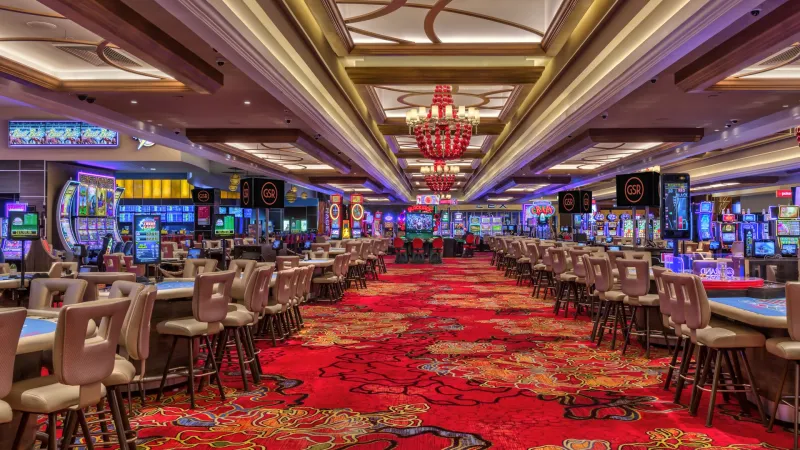
Photo: empty casino slot floor late at night quiet aisle, via aiartlookbook.com
Every casino in the United States markets its peak. The Saturday night crowd, the headline act, the tournament draw, the champagne pour at midnight — this is where the comp budget goes and where the photographs are taken. We would like to make an unfashionable argument on behalf of the hour nobody promotes: the last one.
Whether that hour arrives because a state-mandated closing time is approaching or because a 24/7 room simply empties out at four in the morning, the final sixty minutes of a session offer conditions that a crowded floor cannot match. Treating that hour with the same deliberate preparation you would apply to a host-arranged private room is, in our view, the single most underused tactic available to a serious player.
What follows is an opinion, clearly labeled as one, followed by the practical caveats that keep it honest.
The Room Changes Before the Clock Does
Something happens to a slot floor between the last big group's departure and the closing announcement. The sound changes first — the layered din flattens into something you can hear individual machines through. Then the aisle traffic thins, and with it the ambient pressure to move along, give up a seat, or accept a machine because it was the only one open.
This is not romance. It is arithmetic. Fewer players means less competition for the seats you actually wanted, shorter waits for an attendant, and a floor supervisor with enough slack in the schedule to answer a question properly rather than over a shoulder.
Staff Attention Gets More Honest
The peak-hour host is performing triage. The late-hour host is having a conversation. We have argued elsewhere in these pages that host relationships are built on data, not charm, and the final hour is where that data gets exchanged: an unhurried review of your play, a straight answer about a comp threshold, a candid word about which machines have been serviced this week.
Staff candor also extends to the less flattering information. Ask a supervisor at 3 a.m. why a bank of machines is dark and you are likelier to hear the real reason — a parts delay, a jurisdiction-wide vendor backlog — than a polished non-answer. That kind of intelligence is worth more than a drink ticket.
Floor Conditions Are Simply More Visible
Carpet stains, sticky buttons, and a chair with a broken height lever are all easier to spot when the room is quiet, and easier to report when the staff are not sprinting. The final hour is when you can inspect a machine the way you should: check the paytable glass, confirm the ticket printer is working, verify the denomination and the number of lines before the first spin rather than after the tenth.
It is also when maintenance actually happens. Many properties schedule cabinet service, hand-pay reconciliation, and progressive verification in the low-traffic window. A machine that has just been opened, cleaned, and closed again is not a lucky machine — but it is a functioning one, and functioning is the only edge the floor can honestly offer.
Practical Caveats for US Players
The argument only holds if it respects the rules of the jurisdiction you are standing in.
Closing times are real. Casino operating hours are set by state regulators, and they vary widely — Nevada's 24-hour rooms sit in the same country as states where gaming floors must close for several hours each night. Do not plan a session around an assumption. Confirm the closing time at the player services desk or on the property's posted schedule, and build in ten minutes of buffer.
Cashing out takes longer than you think. TITO redemption kiosks can be taken offline for the night's reconciliation, cashier cages may close before the floor does, and hand pays over the reporting threshold require an attendant and paperwork. If you are holding a ticket near closing, cash it early. Do not be the player standing at a shuttered cage at 3:58 a.m.
Tax paperwork has a clock. Slot wins at or above the federal reporting threshold generate a W-2G, and the attendant who processes it needs a supervisor and a working printer. Late-night staffing is thinner; allow time.
Fatigue is a real cost. The final hour is also the hour when decision quality collapses. A quiet floor is a comfortable place to make a bad decision slowly. Set a hard time limit alongside your money limit, and honor the time limit first.
Safety, not atmosphere. Late hours mean emptier parking structures and fewer people on the walk to the car. Use a security escort if the property offers one — most do, and asking is not an imposition. Park where you can see the entrance.
A Short Protocol for the Last Sixty Minutes
Announce the hour to yourself in advance and treat it as a defined session rather than an extension of the previous one. Set a separate, smaller bankroll for it. Choose one or two machines you have already inspected. Ask the host one prepared question. Cash out at a predetermined time, not at a predetermined feeling. Then leave, and write down what you learned.
The velvet rope, in the end, is not something a casino hangs for you. It is a boundary you draw around your own attention. The last hour of the night is the easiest place in the building to draw it — quieter, clearer, and staffed by people with time to answer. That is the closest thing to a private room most players will ever be offered, and it costs nothing but discipline.
Fortuna Palace publishes this as opinion, not instruction. Play within your means, within your state's rules, and within the hour you promised yourself.